It’s time to climb out and see the light
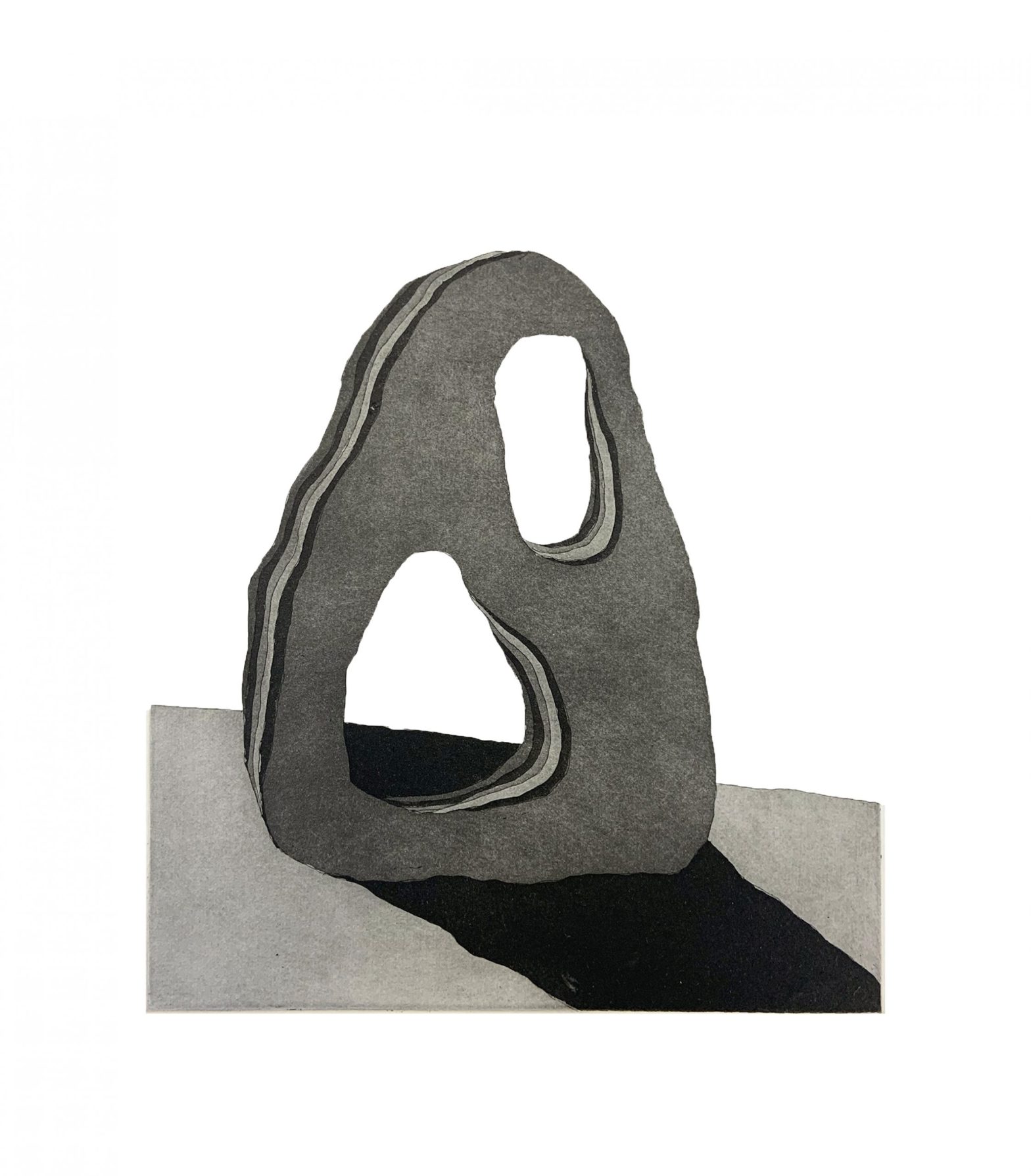
We’re all familiar with the Yin-Yang symbol. There’s two swirling teardrops, each with a hole in the middle; the hole being a small piece of its equal and opposite part. Thus, there is black in white, and white in black. Even these polar opposites remain connected essentially.
This helps to illustrate our ridiculous situation. Our unfettered capitalist culture has assumed, pretty much, that there are endless holes to pull stuff out of and endless holes to put stuff into, spread across the earth.
Any mined resources cause environmental damage, for sure. But these days, a particular concern is the extraction of Rare Earth Elements, whose magnetic and conductive properties make them vital components for our electronic devices.
Mining REE is highly damaging for ecosystems due to stripping topsoil and drilling holes; it is toxic to labour, which includes African children and Chinese prisoners; it uses huge amounts of water and emits much CO2; plus it creates contaminants and waste that sits in massive tailing ponds which sometimes leak into rivers. So, making holes to extract stuff is a very damaging activity.
Let’s skip over the many joys of using mobile phones. Who isn’t inspired by teenage influencers sharing which pop-up eatery they visited for lunch today? That’s fabulous, but what happens when your phone plan ends and it’s time to upgrade?
Well your phone may end up in one of many places: a bedroom drawer, a high street reseller, somebody else’s bedroom drawer and ultimately, in all these cases, whether wholly or partially, a hole in the ground.
So it’s plugged the gap. Gone back to where it was created. Ashes to ashes. Dust to dust.
Not quite though, as the ‘hole in’ is not the same as the ‘hole out’. Our Take-Make-Waste rationale leaves collateral damage at both ends and in between. I refer to the whole cycle as HIHO (Holes In & Holes Out).
‘Holes out’ create a legacy of polluted negative spaces, unless they are actively regenerated; replanted quarries may be transformed into amazing destinations like the Eden Project. And ‘holes in’ tend to become unstable, festering, methane ridden mounds, possibly providing a low-value living for displaced communities, and maybe one day becoming natural parkland.
The companies responsible for HIHO activities may take a responsible approach. They know that the experience of local communities impacts company perceptions, directly for SMEs and indirectly for MNCs (Multi-National Corporations). Their Triple Bottom Line will be challenged if they don’t mitigate the negative effects of their works. This motivation means that organisations are sometimes more focussed on change than individuals.
Our ‘Issue-Attention’ Cycle means that when we discover a problem, there is enthusiasm to fix it, till the financial/personal/social costs become apparent, leading to a decline in interest. This may be less true for LOHAS (Lifestyles of Health and Sustainability) and LOVOS (Lifestyles of Voluntary Simplicity) consumers, but is generally the case for others.
Historically, companies have viewed the world as ‘inside-out’, where their methods and values are expressed ‘outwards’ into the world. But our Climate Change impacted, Resource Constrained Economy is now making our world ‘outside-in’, where we must adapt to nature’s whims.
The good news is that nature’s production systems are always circular. We can use this as our guide. The circularity of human processes can be gauged by the ISO 14000 family of standards, and social accountability for workers by SA8000. Such measures can reveal the width and depth of our holes, so we can start to figure out how to climb out of them.
 FUNKAR.CO