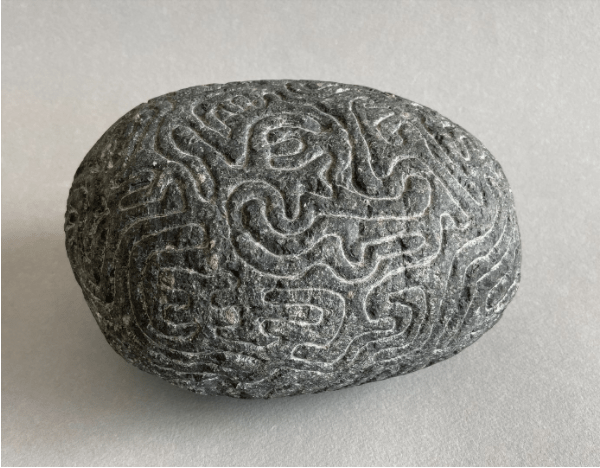
Are we living outside-in or inside-out?
Circles are miraculous creations. One unbroken arc produces a symbolic, holistic view, but it also divides the world into two areas: the inside and outside, never to be joined. Such division is said to be the root cause of many of our world’s ills: causing separation of the included and excluded, creating ‘us’ and ‘them’, those chosen and rejected.
It is the traditional opposition of culture and nature that is forming many problems for our species. Human culture has taken unquestioned priority over terrestrial nature, and organisational culture has intensified these problems in modern times. For companies competing in the game of free enterprise, and winning via their superior efficiency and profit accumulation, it’s winner takes all.
These winnings can be substantial. Ask any multi-billion-dollar company. But the question is then, who takes their losings? Company culture provides common purpose, but for whom?
Production and retail costs have little bearing on social and environmental costs. The former do not account for the pollution, waste, injustice, exploitation, disease and psychological impacts which may have been produced along the way, considered ‘externalities’.
I propose a new kind of smart market – a Smarket – that can fully internalise external costs, using a Total Cost Accounting model. I know there’s carbon accounting platforms like GRI and ‘cap and trade’ emissions already occurring, but this would be even smarter than those. A holistic perspective taking a 360° circular view.
The Smarket would account for all kinds of carbon, it’s focus being on reducing human carbon emissions and the wellbeing of all carbon-based lifeforms. One (monito)Ring to Rule Them All. I know that I should be working out this methodology, rather than making fantasy puns, but sorry, I couldn’t resist.
The marketing discipline, rather than a passive servant, can be a shaper of the world. It can apply a problem-solving perspective for people’s everyday living, anticipating changes that are unavoidable and so helping to minimise current and future ills of our world.
The Brundtland Report’s classic definition of Sustainable Development is activity that ‘meets the needs of the present without compromising the ability of future generations to meet their own needs’. I believe that marketing can illuminate a pathway of creative production rather than creative destruction (though there is a place for that also – separate topic). This is the positive, sustainable way forward: better buses over cars, tastier rather than sweeter products, modular instead of bespoke housing, durable rather than new phones.
Companies that once aspired to shape their environment – acting ‘inside-out’ – are now being shaped by those very environments instead. Whether its governments or transnational entities delivering global policy, civic bodies and the general public demanding better, more responsible behaviour, or Gaia herself affecting their supply chains by ecological restraints and climactic extremes, organisations must accept these new ‘outside-in’ dynamics.
To companies that once made economic demands, the wider world is now dictating its terms socially and environmentally. Companies may continue to prevent, retard or diffuse larger forces, but they cannot hold them off forever. A better approach is to enhance their engagement with these forces, and to develop positive processes rooted in nature. Civic society’s expectations will also help by acting as catalysts for proactive, rather than policy-driven, reactive, change.
I have worked on a distributed computing project, connecting millions of mobile phones into supercomputers. I see some similarities here. We may view these global dynamics as the medieval conception of God: as ‘a circle whose circumference is nowhere and centre is everywhere’. There is no longer any inside or outside here, and hence no people to be chosen or rejected. We are all insiders now, living ‘outside-in’.
 FUNKAR.CO